

The new wave of intelligent shopping
Online shopping has entered a new era powered by artificial intelligence. What used to be a simple catalog of products has now evolved into an intelligent, responsive experience that understands each shopper’s needs. Brands are integrating AI-driven tools that analyze browsing habits, purchase history, and behavioral cues to create a more intuitive and enjoyable buying journey. This shift is not just about automation but about delivering meaningful assistance that mirrors an in-store conversation with a knowledgeable salesperson.
Retailers are seeing how data-driven AI solutions redefine convenience. By reducing the effort required to find suitable products, they transform browsing into something more personal and less overwhelming. The idea is no longer to flood users with endless options but to anticipate what they truly want. This trend shows how online commerce is quietly becoming smarter, faster, and more human in the way it interacts.
Key Insights Summary
- 43% of Americans are aware of AI shopping assistants, while only 14% have used them so far.
- Adoption varies widely by age group, with Gen Z showing a 24% usage rate compared to just 7% among Baby Boomers.
- Interest in price discovery is strong, as 67% of consumers say they would use AI tools to find the best prices.
- Trust remains limited, with only 13% of Americans saying they mostly or completely trust AI shopping advice.
- A significant 41% of consumers say they do not trust AI shopping assistants at all.
- Concerns about support persist, as 40% of users dislike the lack of human assistance in AI based shopping tools.
- Among current users, 44% rely on AI assistants to answer product related questions.
- Another 34% of users use AI shopping assistants mainly to find the best deals.
- Among non users, 67% say they would consider using AI to identify the lowest prices.
- Around 56% of non users want AI support to compare products more easily.
- Features most likely to encourage adoption include cross retailer product comparison, cited by 28% of consumers.
- Faster and clearer responses to product questions are also important, mentioned by 27% of consumers.
AI Shopping Assistant Market Summary
- The global AI shopping assistant market was valued at USD 3.36 billion in 2024.
- The market is projected to reach USD 28.54 billion by 2033.
- Growth is expected at a CAGR of 26.9% from 2025 to 2033.
- North America led the market with a 39.9% revenue share in 2024.
- The U.S. market is expected to expand at a strong pace during the forecast period.
- Asia Pacific is projected to be the fastest growing regional market.
- The solution segment dominated with a 69.6% revenue share in 2024.
- Natural language processing was the leading technology segment.
- Text-based assistants accounted for 45.1% of total market revenue.
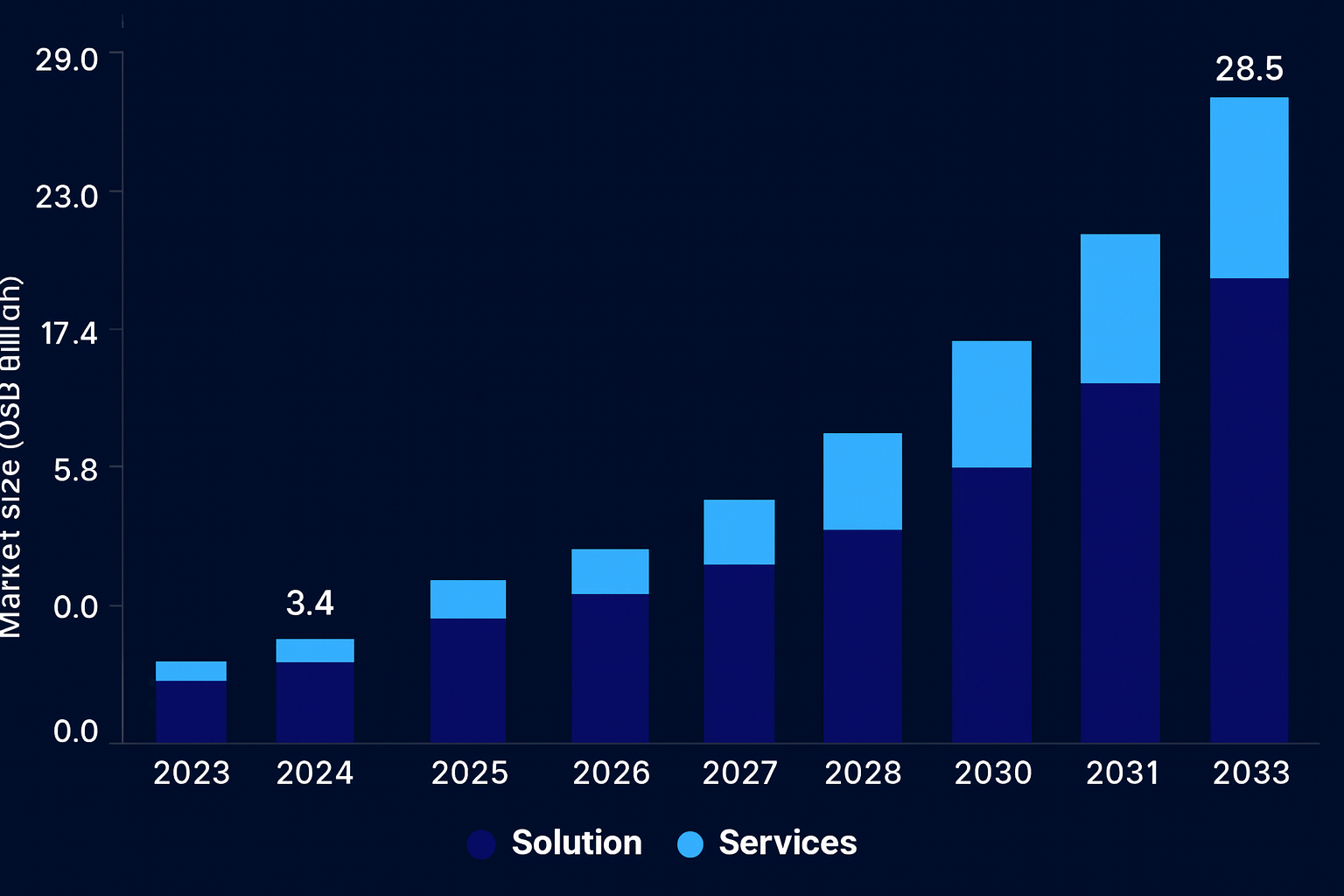
(source: grandviewresearch.com)
U.S. AI Shopping Assistant Market
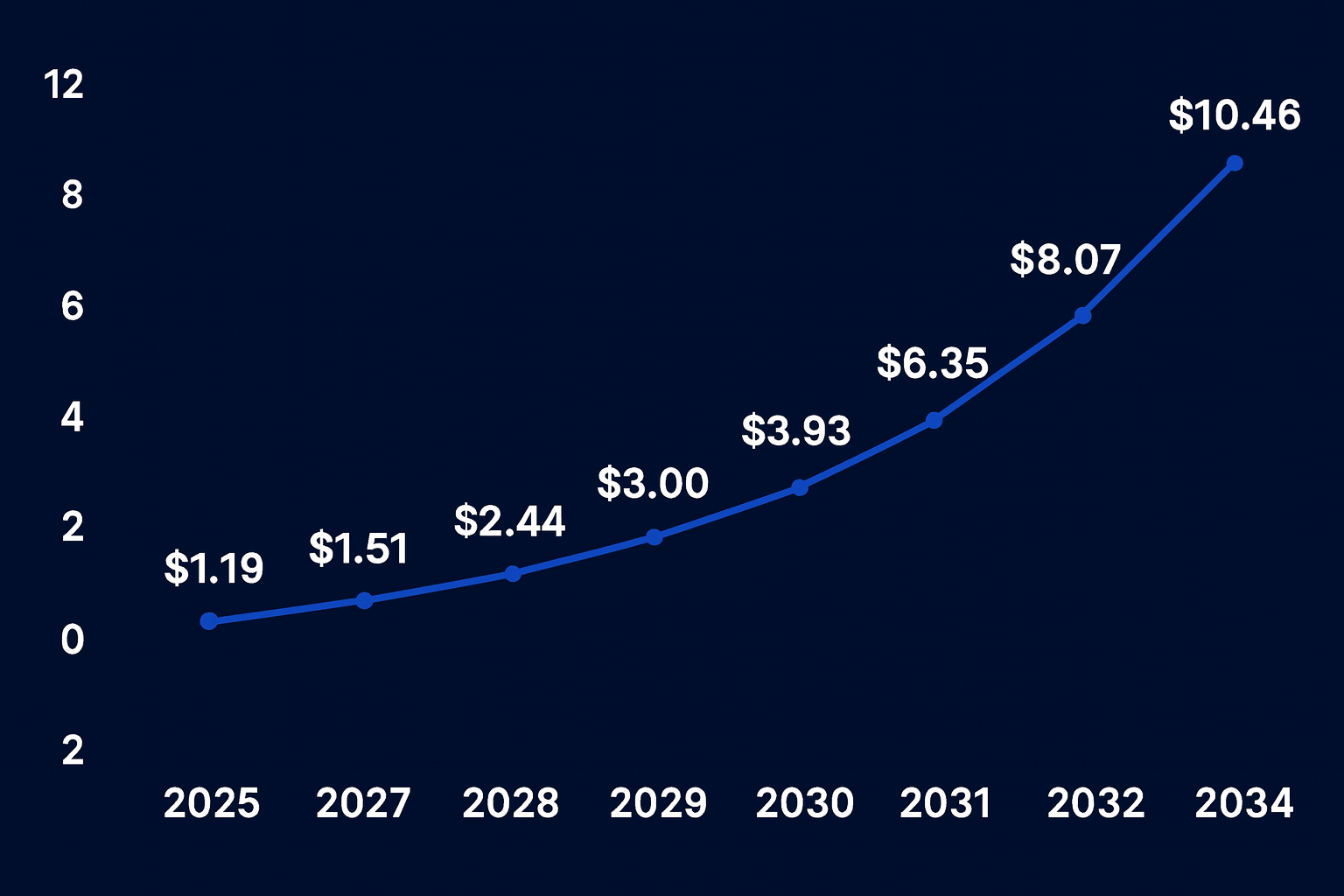

(source: precedenceresearch.com)
Top AI product recommendation tools
| Tool | Key Features | Platforms | Best For Consumers | Availability |
|---|---|---|---|---|
| Google AI Mode | Multi-store product search, virtual try-on using personal photos, and agent-assisted checkout through Google Pay. | Web, Android, iOS | Fashion comparison, cross-site price tracking, and deal discovery. | Free for all users |
| ChatGPT Shopping | Conversational product discovery, instant checkout for supported stores, and bundled gift suggestions. | ChatGPT app | Discovering gifts from small brands and fast product ideas. | Free tier with optional premium plans |
| Amazon Rufus | In-app shopping queries, outfit and recipe suggestions, real-time price tracking, and Prime inventory matching. | Amazon app | Groceries and fashion shopping for Prime users. | Available to Prime members |
| Walmart Sparky | Voice and text shopping assistant, auto-carting of essentials, deal alerts, and style recommendations. | Walmart app | Everyday shopping with fewer abandoned carts. | Free for Walmart shoppers |
| Perplexity AI | Research-driven shopping queries, price comparisons, and direct links to buy across platforms. | Web, Mobile app | Exploratory needs such as finding the best product within a budget. | Free with optional pro subscription |
Business Impact (Retailers)
- Revenue uplift ranges from 10% to 40%.
- Conversion rates can rise from 3.1% to over 12% with AI assistance.
- Up to 93% of customer queries can be handled without human agents.
- Klarna’s AI assistant managed the workload of 700 support agents in its first month.
- Personalized recommendations and smart bundling lift AOV by around 20%.
- IKEA’s AI driven app reduced return rates by 20% through better product guidance.
Recent Developments
- In July 2025, Amazon.com, Inc. expanded its AI powered shopping assistant, Rufus, to desktop based web platforms. The assistant was first launched in India in August 2024 and was initially limited to mobile apps. The desktop rollout improves accessibility and supports real time product recommendations, comparisons, and personalized shopping guidance. Rufus remains in beta and continues to evolve through user feedback.
- Also in July 2025, Wildberries, a leading e commerce platform in Eurasia, began pilot testing an AI powered shopping assistant within its mobile application. The chatbot is currently available to a selected group of users. The company plans a wider release after evaluating user response, with a focus on improving product discovery and customer support.
- In June 2025, Google LLC introduced Doppl, an experimental AI shopping assistant for users in the U.S. Doppl allows virtual clothing try ons using digital and animated visuals. The tool relies on computer vision and machine learning to support more informed fashion choices and enhance the overall online shopping experience.
How AI personalizes every purchase?
One of the biggest strengths of AI shopping assistants lies in personalization. Modern algorithms can recognize patterns in customer behavior, allowing platforms to tailor recommendations with remarkable precision. Shoppers notice it when the website seems to “understand” their specific tastes, whether in fashion, electronics, or everyday essentials. This personalization builds a sense of trust and satisfaction that generic product listings cannot match.
Behind this seamless experience is a sophisticated layer of machine learning and predictive analytics. These tools continuously adapt to individual preferences, refining suggestions over time. As a result, users experience less fatigue from decision-making and more delight in discovering products they genuinely like. The outcome is a more meaningful shopping relationship between the customer and the brand.
Seamless support through virtual assistants
AI-powered chatbots and voice assistants now serve as the first line of support for many online retailers. They assist customers around the clock, answering queries, tracking deliveries, and recommending solutions instantly. This level of accessibility redefines service quality, especially when human agents are unavailable. Virtual shopping assistants act as both guides and problem-solvers, creating an experience that feels immediate and reliable.
The role of these assistants extends beyond basic service; they are learning systems that grow more accurate with each interaction. For businesses, this means shorter response times and higher satisfaction rates. For customers, it represents convenience with a touch of personality, as some assistants can even mimic conversational tones or remember previous preferences. It marks a step toward blending efficiency with warmth in digital interactions.
Real-time recommendations driving smarter decisions
Shoppers today expect instant results, and AI delivers exactly that. Real-time recommendation engines analyze a user’s activity as it happens, identifying the most relevant products within seconds. This is especially valuable during sales events or when customers have limited time. Such insight-driven performance ensures that consumers see fewer irrelevant items and more meaningful options that fit their style, budget, or needs.
For retailers, these real-time insights translate into increased engagement and higher conversion rates. Instead of relying solely on static advertising, brands can adapt their offerings based on live data from user behavior. The ability to present dynamic content on the spot makes online shopping more interactive and satisfying. It encourages users to make quicker and more confident purchase decisions.
Enhancing trust with transparency and feedback
Trust remains a crucial factor in any online transaction. AI shopping assistants are now designed to support transparency by offering clear product comparisons, authentic reviews, and factual information about pricing and availability. Some systems even detect misleading reviews or highlight verified customer feedback. This not only improves buyer confidence but also helps maintain a healthier marketplace.
In addition, AI tools provide retailers valuable insights into customer satisfaction. By analyzing feedback patterns and returns, they can identify product issues or service gaps promptly. This level of responsiveness strengthens relationships between businesses and customers. A transparent, AI-backed communication loop ensures that digital shopping feels authentic rather than purely promotional.
Use cases
| Use Case | Have used AI shopping assistants (%) | Interested in using AI shopping assistants but have not (%) |
|---|---|---|
| Answering questions about products | 44 | 55 |
| Finding specific products online | 41 | 49 |
| Finding best prices or deals | 34 | 67 |
| Getting product recommendations | 33 | 46 |
| Comparing similar products | 31 | 56 |
| Finding specific products in-store | 28 | 39 |
| Planning purchases | 24 | 24 |
| Reading synthesized reviews | 23 | 21 |
| Planning events, trips, or meals | 15 | 24 |
| Virtually trying on clothing/apparel | 12 | 24 |
| Letting an AI shopping assistant complete a purchase on your behalf (without your final review) | 11 | 4 |
(data source: yougov)
You may also read:
The future of digital shopping experience
The transformation brought by AI shopping assistants is still in its early stages. As technology matures, integration with voice search, augmented reality, and advanced analytics will make the experience even more immersive. Shoppers may soon move seamlessly between browsing, trying, and buying with minimal friction. This evolution points toward an ecosystem where every buying decision is guided by an AI companion that truly understands individual needs.
Sources:
- https://www.grandviewresearch.com/industry-analysis/artificial-intelligence-ai-shopping-assistant-market-report
- https://yougov.com/en-us/articles/52608-ai-shopping-assistants-are-catching-on-but-shoppers-still-need-convincing
- https://www.precedenceresearch.com/ai-shopping-assistant-market
- https://bestcolorfulsocks.com/blogs/news/ai-powered-shopping-assistant-statistics
- https://quickpick.ai/blog/best-ai-shopping-assistants-2025